
Workflow 1
Workflow 1: Variation of net primary productivity in aquatic environments in relation to global warming
This analytical workflow investigates the relationships between global warming, primary production, and other key environmental variables in aquatic environments. It enables the integration of in situ aquatic monitoring data with remote sensing observations through the application of regression-based approaches, such as random forest and multiple linear regression models. Multiple linear regression and random forest algorithms can be trained using in situ measurements and subsequently applied to remote sensing imagery, which are used as predictor variables consistent with the trained models, to generate new datasets. The workflow supports the construction of time series for both the target variable and the associated remote sensing datasets used, enabling the analysis of temporal trends and recurrence patterns. In addition, it incorporates predictive modeling techniques to assess ecosystem responses and to forecast future dynamics under changing environmental conditions. The workflow can operate with Ocean Productivity and Ocean Color satellite imagery, The workflow also enables the combination of multiple satellite products using the Raster Calculator tool. This allows new, customised environmental variables to be derived.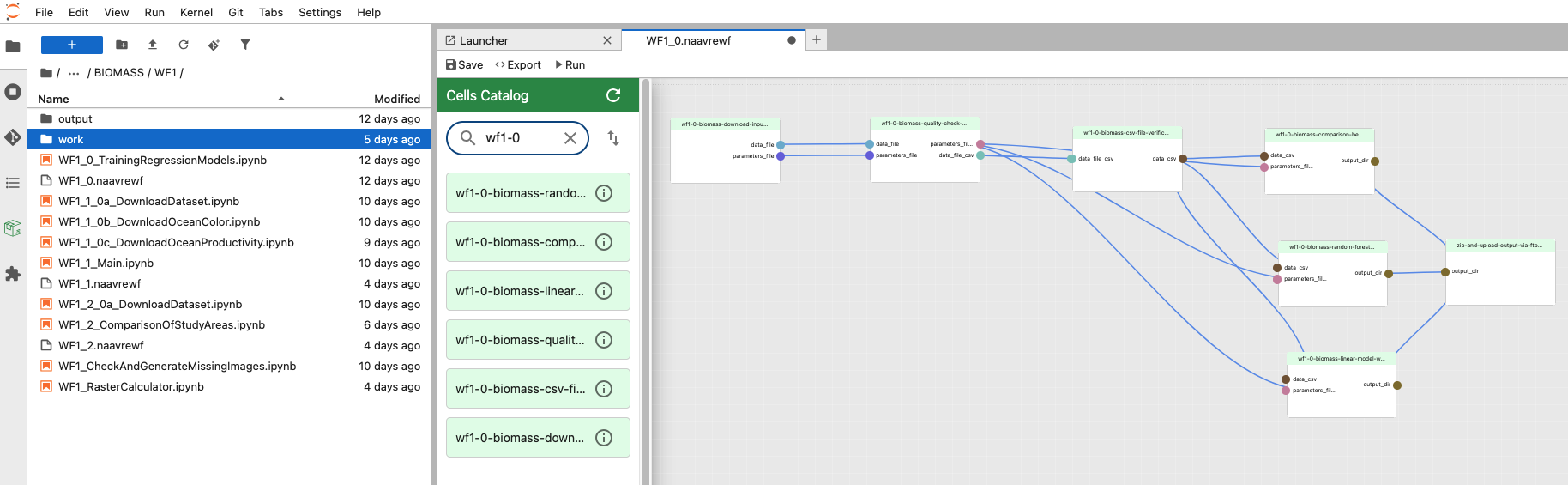
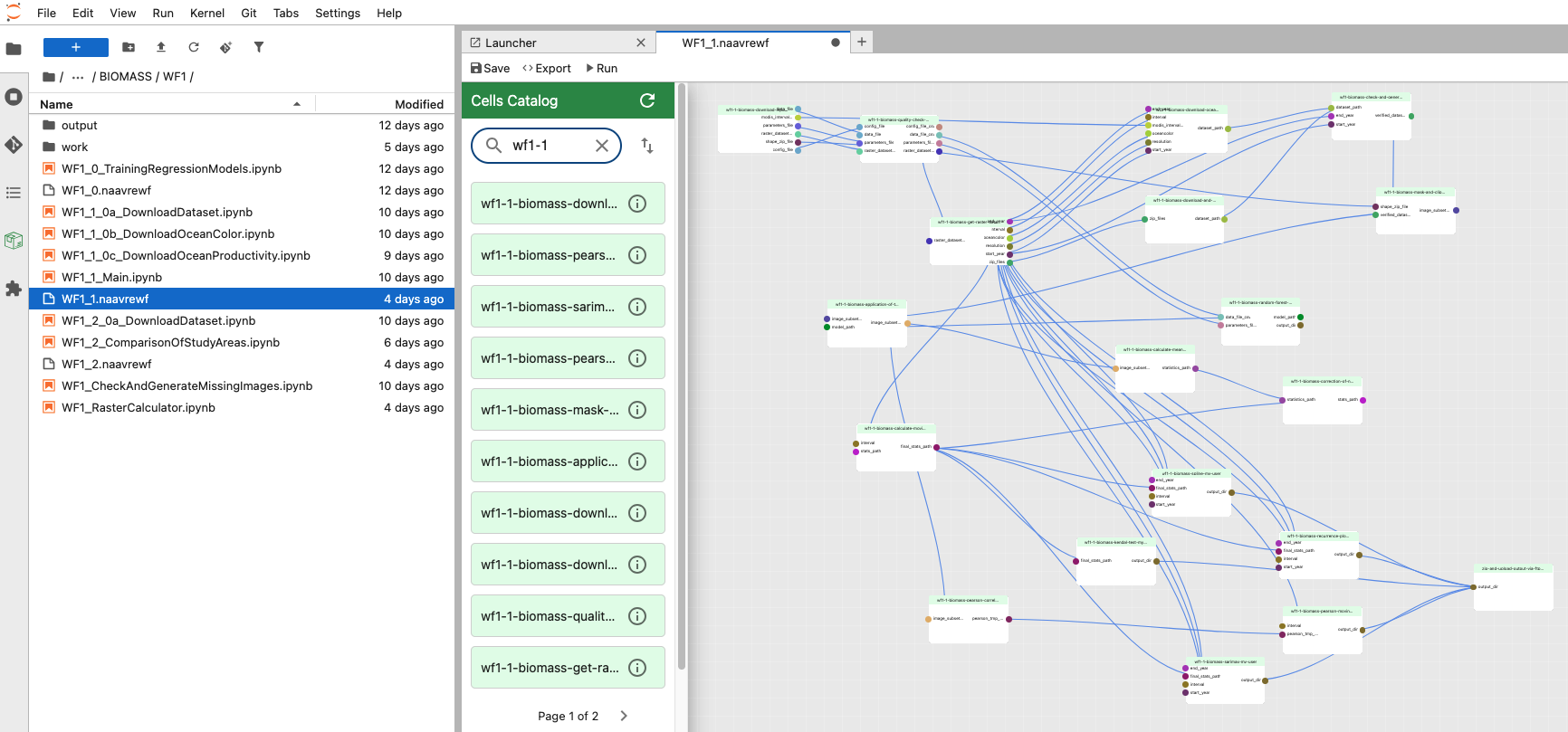
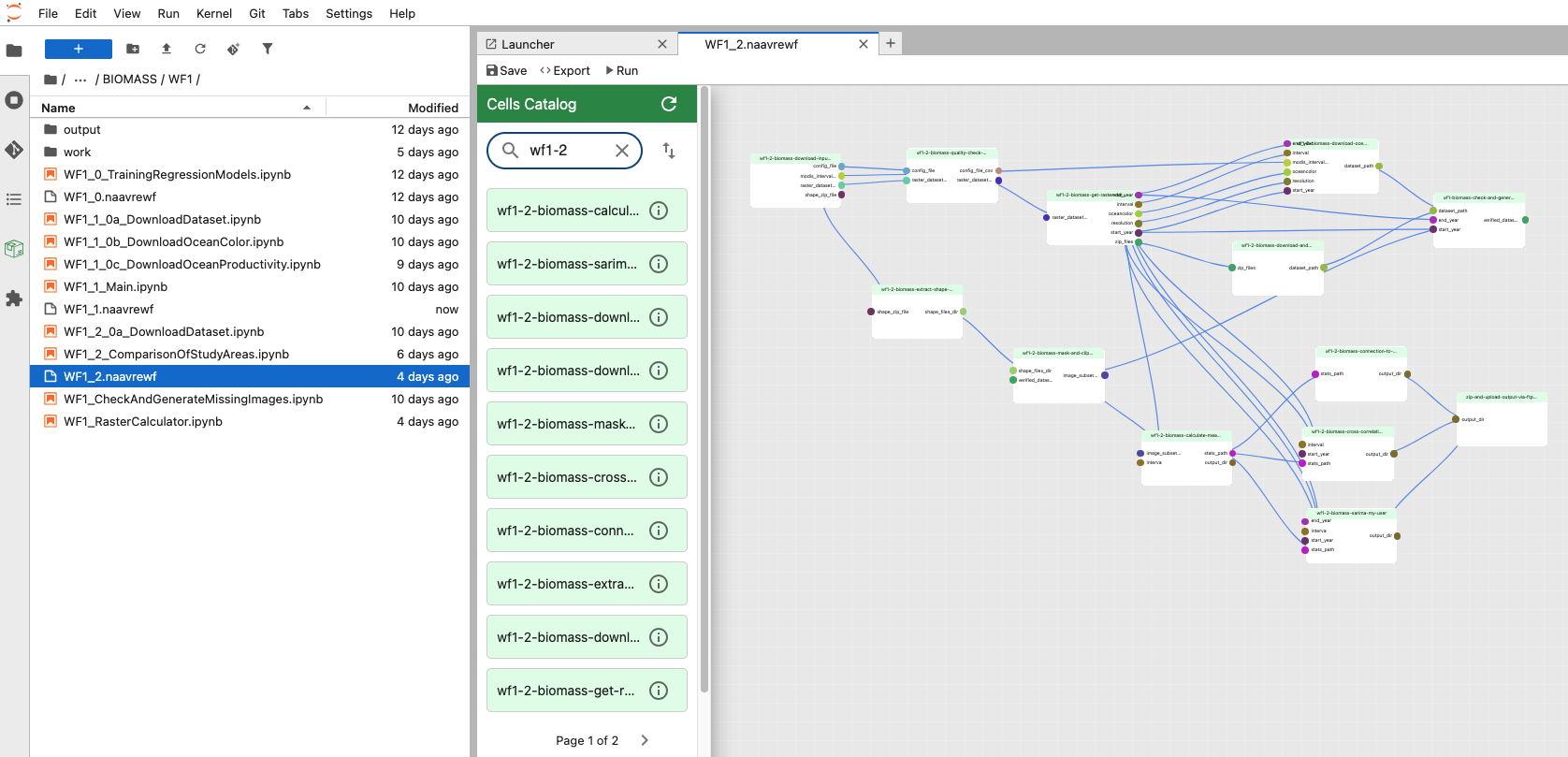
Thanks to its modular structure, this workflow is flexible and easily adaptable. Users can customize the workflow by editing the code and parameters and by adding or removing cells. Furthermore, the workflow can be tailored to specific research needs by performing additional analyses.